
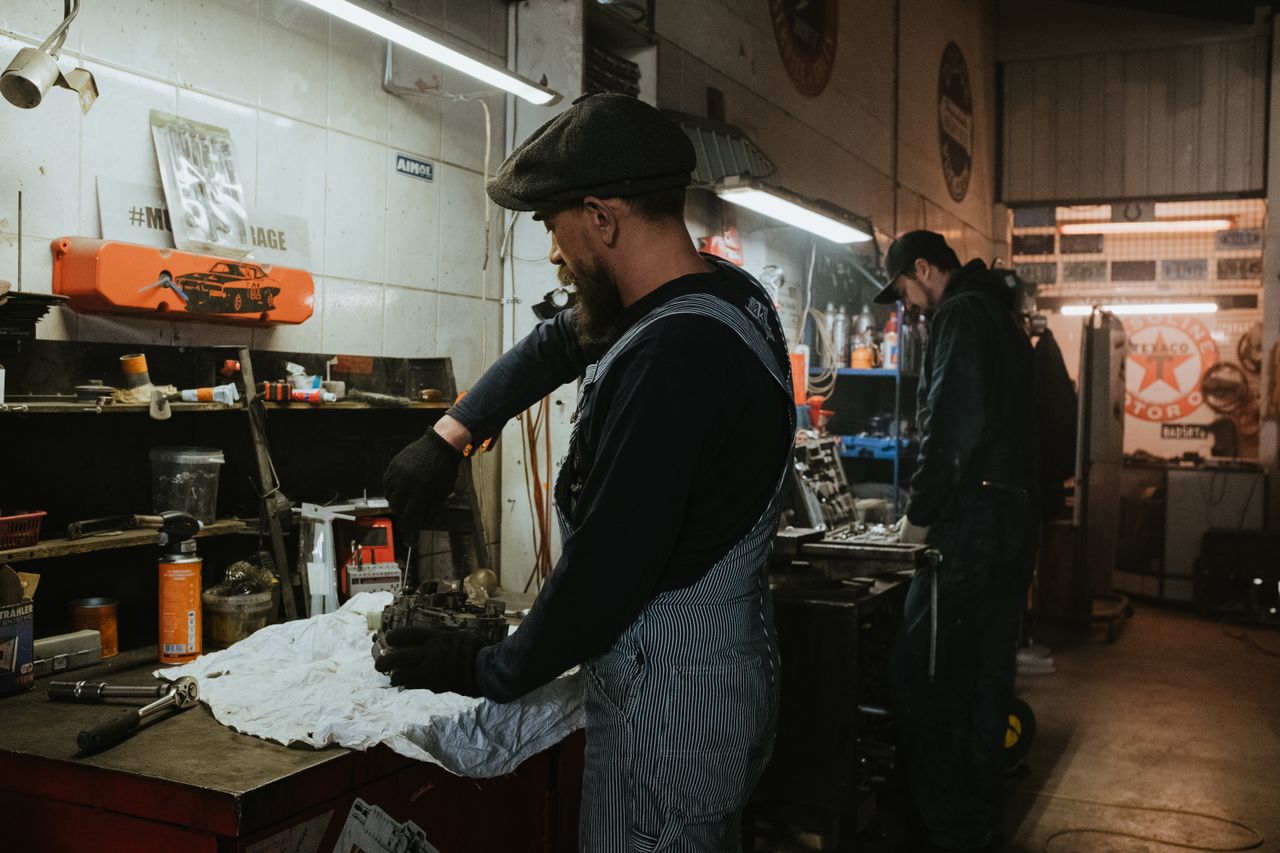

Impact wrenches are among the most useful power tools in a professional automotive workshop. They allow mechanics to loosen and tighten fasteners quickly, reducing the physical effort required for jobs that would otherwise take considerably longer with hand tools. From removing wheels to working on suspension components, the right impact wrench can make repetitive repair tasks more efficient.
For workshops that rely on pneumatic equipment, compressed air plays an important role in keeping tools operating consistently. When comparing air compressors for sale, mechanics need to consider more than the advertised tank size. Air delivery, operating pressure, duty cycle and compatibility with workshop tools can all affect how effectively an impact wrench performs.
Using an impact wrench correctly is also important for safety and for protecting vehicle components. These tools deliver substantial torque, so they should be selected according to the job and used alongside appropriate sockets, torque procedures and personal protective equipment. Understanding how mechanics use impact wrenches helps explain why they remain a standard feature in many automotive repair environments.
Why Impact Wrenches Are Useful in Automotive Repair
An impact wrench combines rotational force with a rapid hammering action. This allows it to deliver high torque without requiring the user to apply the same sustained physical force needed with a conventional breaker bar or ratchet.
The result is faster removal and installation of many threaded fasteners. This is particularly valuable in workshops where mechanics may work on several vehicles during a day.
Impact wrenches are available in different drive sizes and power configurations. Pneumatic models are especially common in professional workshops because they can provide strong and repeatable performance when connected to a suitable compressed-air system.
Cordless electric models have also become increasingly popular. They offer greater portability and eliminate the need for an air hose, although battery capacity, charging requirements and tool specifications need to be considered.
Removing Wheels and Wheel Fasteners
One of the most familiar uses for an impact wrench is removing wheel nuts. A mechanic can use the tool to quickly remove fasteners before taking a wheel off a vehicle.
This can save considerable time during tyre-related work, brake inspections and suspension repairs.
However, an impact wrench should not automatically be used as the final tightening method for every wheel fastener. Wheel nuts generally need to be tightened according to the vehicle manufacturer’s specified torque.
A common workshop approach is to use the impact wrench for initial fastening and then finish with a calibrated torque wrench where the manufacturer’s procedure calls for a specific torque value.
Correct socket selection also matters. Mechanics typically use impact-rated sockets with impact wrenches rather than ordinary chrome sockets, which may not be designed for the forces generated by an impact tool.
Working on Suspension Components
Suspension repairs often involve fasteners that have been exposed to road dirt, moisture and corrosion. These conditions can make bolts and nuts difficult to remove.
An impact wrench can provide the additional torque needed to break loose stubborn fasteners. This can be useful when working on components such as control arms, shock absorbers, struts and other suspension hardware.
The tool does not eliminate the need for inspection, however. A fastener that refuses to move may be seized because of corrosion, cross-threading or another mechanical problem.
Mechanics therefore need to avoid simply increasing tool power without considering what is happening to the component. Excessive force can damage fasteners or surrounding parts.
Servicing Brakes and Other Components
Impact wrenches can also assist with certain brake and chassis-related repairs. They may be used to remove appropriate bolts during jobs involving brake components, hubs or related assemblies.
Their main advantage is speed. A mechanic who has to remove multiple fasteners can complete the disassembly stage much more quickly than by using a manual ratchet alone.
The tool is generally most useful during removal rather than precision tightening. Where a component requires a specified final torque, the manufacturer’s service instructions should take priority.
Different vehicles also use different fastener sizes, materials and torque specifications. A procedure that is suitable for one vehicle should not automatically be applied to another.
How Mechanics Choose the Right Impact Wrench
Choosing an impact wrench involves more than looking at its maximum torque figure. Mechanics consider the type of work being performed and the surrounding workshop setup.
Important factors include:
- Drive size and socket compatibility
- Maximum and working torque
- Available air pressure for pneumatic models
- Required airflow or CFM
- Duty cycle
- Tool weight and ergonomics
- Access to confined areas
- Frequency of use
- Availability of suitable impact-rated accessories
A compact tool may be preferable when working in restricted areas around an engine bay or suspension assembly. A larger model can be useful for heavy-duty automotive applications where greater torque is required.
The most powerful tool is not necessarily the best choice. Excessive torque can make a tool unnecessarily heavy and may increase the risk of damaging fasteners or components.
Understanding the Role of the Air Compressor
For pneumatic impact wrenches, the compressor is an important part of the overall system. The tool depends on a continuous supply of compressed air, rather than simply the amount of air stored inside the tank.
A compressor’s airflow rating is therefore particularly important. The tool manufacturer will normally specify an air consumption or required airflow figure. The compressor should be capable of supplying the necessary volume at the required pressure.
Tank capacity also influences how frequently the compressor needs to run. A larger receiver can provide a reserve of compressed air, while the pump then replenishes that supply as pressure falls.
Mechanics who are assessing air compressors for sale should compare the compressor’s actual delivered airflow with the impact wrench’s requirements rather than relying only on horsepower or tank capacity.
This distinction matters because two compressors with similar tank sizes can have significantly different air delivery capabilities.
Using the Tool During a Typical Repair
An impact wrench normally forms part of a broader workflow rather than replacing every other hand tool.
A typical repair process might involve:
- The vehicle is secured and prepared according to the relevant workshop procedure.
- The mechanic selects the appropriate impact-rated socket and checks the tool.
- The impact wrench is used to remove suitable fasteners efficiently.
- Removed components and fasteners are inspected for wear, damage or corrosion.
- Replacement or reinstallation takes place using the correct components.
- Fasteners requiring a specified final torque are tightened according to the manufacturer’s instructions.
- The completed repair is checked before the vehicle is returned to service.
This approach combines the speed of powered equipment with the precision of manual torque control and visual inspection.
Why Air Supply Consistency Matters
An impact wrench may perform differently when the air supply is inadequate. If the compressor cannot maintain sufficient pressure and airflow while the tool is operating, performance can drop during extended use.
This can result in slower fastener removal and longer recovery periods between tasks.
Air hoses and fittings also influence the system. A restrictive hose, unsuitable coupling or poorly maintained connection can limit airflow before the compressed air even reaches the tool.
For a busy workshop, compressor capacity should therefore be considered as part of the entire pneumatic system.
Regular maintenance is equally important. Compressors may require draining, inspection, filtration and other maintenance according to their design and manufacturer recommendations.
Safety Considerations When Using Impact Wrenches
Impact wrenches are powerful tools and should be treated accordingly. Mechanics should follow the tool manufacturer’s operating instructions and the vehicle manufacturer’s repair procedures.
Eye protection is particularly important because workshop environments can contain loose debris, dust and particles. Hearing protection may also be appropriate where tools and other machinery create high noise levels.
Hands should remain clear of moving parts, and damaged sockets, hoses, fittings or electrical components should not be used.
Pneumatic equipment should also be disconnected or depressurised as appropriate before maintenance or when working on the tool itself.
Another important consideration is fastener control. An impact wrench can remove a fastener quickly, but it does not replace proper inspection of the threads, mating surfaces or component condition.
Maintenance Helps Keep Workshop Tools Reliable
Regular tool maintenance can help maintain consistent performance. Pneumatic impact wrenches should be maintained according to the manufacturer’s instructions, including appropriate lubrication where required.
Air systems should also be kept in good condition. Moisture, contamination and leaks can affect pneumatic equipment over time.
Hoses should be inspected for damage, while couplings and fittings should be checked for leaks or deterioration.
A workshop that maintains both its tools and compressed-air equipment is better positioned to achieve reliable day-to-day performance.
When an Impact Wrench Should Not Be Used
Despite their versatility, impact wrenches are not suitable for every fastening task.
Precision work often requires a calibrated torque wrench or another tool specifically designed for controlled tightening.
An impact wrench should also not be used simply because a fastener is difficult to remove. If a component appears seized, damaged or unusually resistant, the mechanic should investigate the cause and follow the appropriate repair procedure.
Vehicle manufacturers may specify particular tools or procedures for certain fasteners. Those requirements should always take precedence over general workshop habits.
The Value of the Right Workshop Setup
A well-equipped automotive workshop typically relies on several complementary tools rather than a single piece of equipment. Impact wrenches provide speed, hand tools provide control and torque wrenches provide precision where specified.
For pneumatic equipment, the compressor is effectively part of the tool system. Matching compressor output to the demands of the impact wrench helps reduce performance problems and unnecessary cycling.
Choosing equipment based on actual workshop requirements is therefore more useful than selecting equipment solely by headline specifications.
Whether the work involves routine wheel removal or more demanding mechanical repairs, an impact wrench can reduce repetitive effort and improve workflow when used correctly. With an appropriate air supply, compatible accessories, proper maintenance and careful attention to manufacturer specifications, it becomes a practical addition to an automotive workshop.